 North Country Organics
Organic Gem

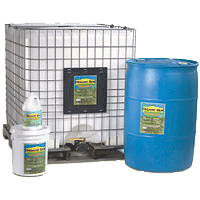 Organic Gem is made using only FRESH deep-water bottom-feeding fish – rich in over 70 trace minerals and free from harmful coastal heavy metals. Organic Gem is the purest organic fish fertilizer on the market today!
- The solids in Organic Gem are ground to particles of 105 microns (0.004 in) and will pass through a 140 mesh sieve. If dispensed through drip irrigation, the Organic Gem solution must be kept agitated or stirred.
- A superior process
Organic Gem is produced using a unique cold enzymatic process. The natural fish proteins are never denatured nor are the beneficial oils and collagen removed. - OMRI listed
Organic Gem® is listed by the Organic Materials Review Institute (OMRI), one of the strictest organic material review organizations in the country. Certified organic farmers can apply it with no restrictions. - Organic Gem® Liquid Fish Fertilizer provides superior . . .
- Plant Health
Gives long lasting results with improvements in plant color, overall health and tremendous growth. - Soil Health
Soil qualities are improved for deeper rooting and better penetration of water and nutrients. Unproductive soil is easily rebuilt and replenished. - Microbial Activity
Promotes the growth of bacteria and other organisms as well as providing supplementary macro and micronutrients.
- Plant Health
Directions For Household, Yard & Garden
Shake well before using. Prepare for one application only. Mix well with water. Minimum dilution rate: 15 parts water to 1 part fertilizer. Use all mixed solution. Do not store in diluted form. Wash hands and all equipment thoroughly after use.
Application Rates For Household, Yard & Garden
House Plants: Use 1 Tablespoon per gallon of water. Feed every 2 weeks.
Outdoor Plants : Use 2 Tablespoons (1 fluid ounce) per gallon of water. Feed flowers and vegetables every 2 weeks. Apply generously to soil or as a foliar feed until leaves are wet, top and bottom. For best results, foliar feed early or late in the day.
Lawns: Use 4 ounces per gallon of water. One gallon of fertilizer mixed with 30-40 gallons of water will cover ¼ acre. Feed lawn every 4 weeks.
Trees & Shrubs: Use 8 ounces per gallon of water. Feed by boring several small holes in the soil 1 to 2 feet away from root ball. Fill holes with solution. Feed 2-3 times per season.
Compost Starter: Use 4 ounces per gallon of water. Mix into compost every 2-3 weeks.
Directions For Growers & Commercial Agriculture
Agitate (shake well) before adding water. It is important to agitate Organic Gem well to ensure a homogenous product mix, particularly if it has been stored below 32° Fahrenheit. Add water. See “Dilution Rates” below for specific uses. Extra water is not harmful since it acts as a carrier. The amount of water may be adjusted upwards to suit your equipment and the amount of leaf surface on plants. Mix well. After adding water, it is important to agitate (shake well) again. Be sure to use all material that has been mixed with water. Do not store diluted material. Do not apply Organic Gem when soil temperature is below 45° Fahrenheit, as the product will not activate. Apply at (or just before) 45°F is reached in the soil.
Dilution Rates For Growers & Commercial Agriculture
Foliar Applications: Use 1 gallon Organic Gem to 50 gallons of water. Spray after sunset or during the coolest part of the day.
Soil Applications: Use 1 gallon Organic Gem with sufficient water to cover intended area. Minimum dilution rate is 1 part Organic Gem to 15 parts water, sprayed with seed or side-dressed with seed.
Aerial Spraying: Use 1 gallon Organic Gem to 15 gallons water.
Seedlings or Transplants: Dip in a solution of 4 oz. Organic Gem to 1 gallon water, then plant.
Application Rates for Growers & Commercial Agriculture
Apples – 5 gallons per acre foliar at pre-pink or petal fall. 4 gallons per acre 15-21 days after full bloom. 3 gallons per acre foliar 21-30 days later.
Apricots – 3-4 gallons per acre foliar at petal fall. 3-4 gallons per acre 15 day later. Fall ground application.
Asparagus – 10 gallons per acre at planting. 15 gallons per acre second year. 20 gallons per acre third year and after.
Barley (dry land) – 5 gallon per acre banded with seed. 5 gallons per acre foliar in spring at tilling. Barley (irrigated) – 10-15 gallons per acre banded with seed. 5 gallons per acre 30 days after emergence. 5 gallons per acre through each 30 days for a total of 30 gallons.
Beans – 5 gallons per acre banded with seed. Up to 5 gallons per acre foliar at pre-bloom.
Beans (Lima) – 5 gallons per acre with seed. 5 gallons per acre foliar at 4th node. 5 gallons per acre at pre-bloom.
Cabbage – 5 gallons per acre at planting. 2-3 gallons per acre 3 weeks later. 2-3 gallons per acre foliar 3 weeks later.
Carrots – 5 gallons per acre banded with seed at planting. 5 gallons per acre foliar when tops have sufficient foliage. 4 gallons per acre foliar each 30 days for a total of 30 gallons.
Celery – Prepare soil at 10 gallons per acre. 3 applications at 5 gallons per acre during season.
Cherries – 5 gallons per acre between petal fall and shuck. 5 gallons per acre foliar at pit hardening.
5 gallons per acre 15-21 days post harvest.
Clover – 5 gallons per acre at planting. No added Nitrogen necessary.
Cole Crops – 5 gallons per acre at planting. 5-7 gallons per acre foliar 3-4 weeks later. 5-7 gallons per acre foliar 3-4 weeks later.
Corn (field) – 12-14 gallons per acre banded with seed. 6 gallons per acre foliar 30 days after emergence.
3rd application of 5 gallons per acre.
Corn (sweet) – Most climates require a total of 20 gallons per acre. 10 gallons per acre banded with seed. 5 gallons per acre foliar when plants are about 4″ tall. 5 gallons per acre foliar when plant is 18″-20″ tall.
Cranberries – 5 gallon per acre soil preparation. 2 gallon per acre through irrigation system at popcorn. 2-3 gallon per acre at hook. 2-3 gallons per acre at fruit set and bud differentiation.
Cucumbers – 5 gallons per acre at planting. 5 gallons per acre foliar 30 days later. 5 gallons per acre foliar 30 days later.
Dry Peas – 5 gallons per acre at planting. No extra Nitrogen necessary.
Evergreens and Ornamentals – 5 gallons per acre foliar following last frost. 2-3 gallons per acre foliar after bud hardening. Third application if necessary. No foliar spraying after late August.
Grapes – Fall ground application of 10 gallons/acre. Spring application of 5 gallons/acre. Mid season application of 5 gallons/acre. After harvest and subsequent applications of 5 gallons/acre.
Grass Seed (irrigated) – 10-16 gallons per acre in three applications.
Grass Seed (dry land) – 3 gallons per acre banded at planting. 4-8 gallons per acre in two foliar applications.
Hops – 5 gallons per acre to ground in late fall. 5 gallons per acre foliar in May. 5 gallons per acre at pre-bloom.
Lentils – 3-5 gallons per acre at planting. No other Nitrogen necessary.
Malting Barley – 3 gallons per acre with seed. 3 gallons per acre foliar at tillering.
Melons – 5 gallons per acre at planting. 5 gallons per acre foliar 30 days later. 5 gallons per acre foliar 30 days later.
Mint – If irrigated, can be applied through sprinkler system during watering cycle. Purge with water at end of cycle. 2-3 gallons per acre in fall, post-harvest. 2-6 gallons per acre per week for a total of 15 gallons per acre, until July 10.
Nectarines – 3-4 gallons per acre foliar at petal fall. 3-4 gallons per acre 15 days later. 5 gallons per acre fall ground application recommended.
Oats – 3 gallons per acre with seed. 3 gallons per acre foliar at tillering.
Onions – 10 gallons per acre banded with seed. 5 gallon per acre foliar 30 days later. 5 gallon per acre foliar each 30 days for a total of 25-30 gallons.
Ornamentals – 5 gallons per acre foliar following last frost. 2-3 gallons per acre foliar after bud hardening. Third application if necessary. No foliar spraying after late August.
Pasture (dry land) – 3-5 gallons per acre foliar per cutting, diluted at 50:1.
Pasture (irrigated)
Crop Condition Season Rate – 50:1
Alfalfa 2-3 gal per acre
Alfalfa/Grass 50% grass Any 4-10 gal per acre
Grass, low yield Poor Short 2-6 gal per acre
Grass, high yield Poor Short 4-8 gal per acre
Grass, low yield Good Short 6-10 gal per acre
Grass, high yield Good Short 14-20 gal per acre
Grass, low yield Poor Long 4-8 gal per acre
Grass, high yield Poor Long 8-12 gal per acre
Grass, low yield Good Long 10- 18 gal per acre
Grass, high yield Good Long 24-30 gal per acre
Peaches – 5 gallons per acre foliar at petal fall. 5 gallons per acre 15 days later. 5 gallons per acre fall ground application recommended.
Pears – 5 gallons per acre foliar at pre-pink or petal fall. 4 gallons per acre 15-21 days after full bloom. 3 gallon per acre foliar 21-30 days later.
Potatoes – Planting – 10 gallons per acre, banded with seed. Flower onset – 5 gallons per acre, foliar spray. Tuber enlargement- 5 gallons per acre, foliar spray. Maturity (vine withers) – 5 gallons per acre, foliar spray.
Prunes – 3-4 gallons per acre foliar at petal. 3-4 gallons per acre 15 days later. 5 gallons per acre fall ground application is desired.
Raspberries & Other Caneberries – Older Plants, 5 gallons per acre soil application. 3-4 gallons per acre foliar, when coming out of dormancy. 3-4 gallons per acre starting on 1st of June. New Plantings, First Year: 4-6 gallons per acre split between banding and foliar feeding. Second Year: 6-8 gallons per acre in three applications, foliar or ground applied. Third Year: 8-1 0 gallons per acre split between banding and foliar feeding. Fourth Year: 10-12 gallons per acre split between banding and foliar feeding.
Rhubarb – 10 gallons per acre at planting to establish plant. 15 gallons per acre second year. 20 gallons per acre third year and after.
Ryegrass (perennial) – 3-4 gallons per acre banded with seed. 4 gallons per acre sprayed early September. 8 gallon per acre sprayed 1st of March.
Seed Grasses and Cover Crops – Plant with 3-5 gallons per acre top-dressed or banded. 3-5 gallons per acre each 30 days up to 15 gallon total.
Spring Wheat – 3 gallons per acre with seed. 3 gallons per acre foliar at tillering.
Squash – 5 gallon per acre at plant. 5 gallon per acre foliar 30 days later. 5 gallon per acre foliar 30 days later.
Strawberries – 5 gallons per acre foliar at pre-bloom. 5 gallons per acre foliar mid-August for crown building. 5 gallons per acre with new planting.
Sugar Beets – Determine normal yield for the area. Split applications between banding-with seed and foliar spraying of a maximum of 5 gallons per acre per application. Use 1 gallon of Organic Gem per ton of product for climate and area. Apply prior to July l.
Table Beets – 5 gallons per acre banded with seed at planting. 4-6 gallon per acre foliar at two leaves.
4-6 gallon per acre 30 days later.
Tomatoes – 5 gallons per acre soil preparation. 5 gallons per acre foliar 3 weeks later. 5 gallons per acre before fruit set.
Vineyards – Fall ground application of 10 gallons/acre. Spring application of 5 gallons/acre. Mid season application of 5 gallons/acre. After harvest and subsequent applications of 5 gallons/acre.
Winter Wheat – 5 gallons per acre banded with seed. 5 gallons per acre foliar in spring at tillering.
Zucchini – 5 gallons per acre soil preparation. 5 gallons per acre foliar 30 days later. 5 gallons per acre foliar 30 days later.
Storage
Undiluted Organic Gem stores well in conditions of moderate cold or heat. It has a shelf life of 5+ years.
Once you have added water, it is important to use the entire diluted product. Do not store diluted material. Diluted material will experience microbial growth that can cause odor and render the product ineffective.
Manufactured by Advanced Marine Technologies.
OMRI LISTED™ – View OMRI Certificate
For more information, download the product label pdf.
Click here to view SDS